Basic Information
| Field | Detail |
|---|---|
| Full name | Anna Margaretha Gret Baumann-Jung |
| Birth name | Anna Margaretha Jung |
| Known as | Gret Baumann, Gret Baumann-Jung, Gret Jung |
| Birth | 8 February 1906, Switzerland |
| Death | 1995, aged 89 |
| Nationality | Swiss |
| Parents | Carl Gustav Jung and Emma Rauschenbach Jung |
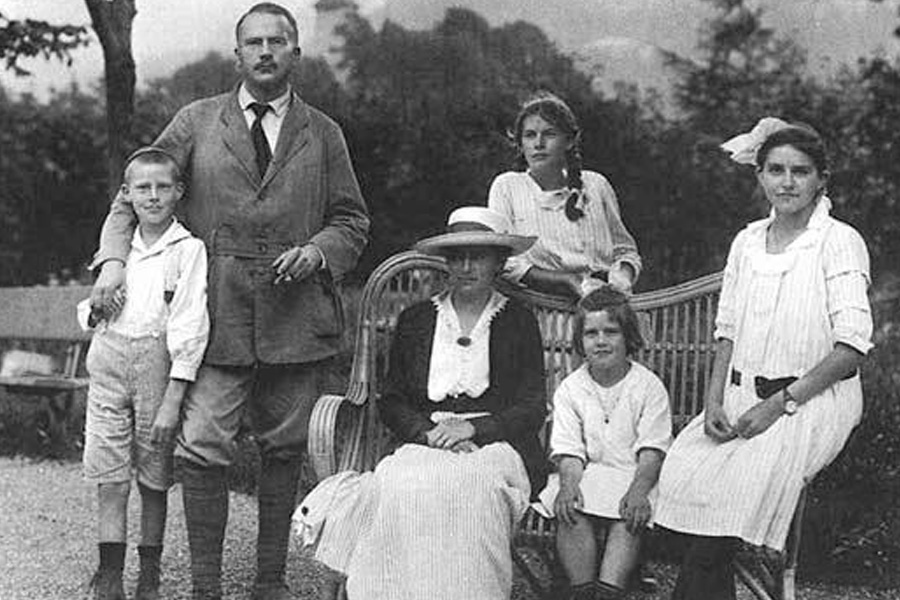
| Siblings | Agathe Niehus, Franz Jung-Merker, Marianne Niehus, Helene Hoerni |
| Spouse | Fritz Baumann |
| Children | Five, including Dieter Baumann and Wolf Baumann |
| Occupation | Professional astrologer with a psychological focus |
| Notable activities | Calculated horoscopes for Jung’s patients, contributed to synchronicity studies, lectured on astrology, authored a 1975 essay on Jung’s horoscope |
| Maternal family | Rauschenbach industrial family linked to IWC Schaffhausen |
| Languages and milieu | Swiss-German family environment with international intellectual ties |
Early Years and Formation
Gret Baumann was born into an idea-filled house in 1906. Carl Gustav Jung, her father, was already studying dreams and myths, while Emma, her mother, gave academic and material support. Apparently, Gret got the astrological flame at age five. Her childhood fascination turned into craft as she calculated charts by hand utilizing ephemerides, logarithms, and all the pre-digital patient arithmetic.
Patients, scholars, clergy, and travelers met at Jung’s Küsnacht house. Alchemical symbols, mandalas, and biblical echoes wafted through the spaces like weather. Gret pioneered a psychological astrology that could stand alongside her father’s analytical cosmology in such atmosphere.
A Family of Minds and Means
The Jungs combined brains and industry. Emma’s Rauschenbach inheritance from IWC Schaffhausen financed family initiatives and assets. It also supported a life where scholarship was a daily necessity. The youngsters grew up in libraries with fast-paced medical, theology, and myth discussions.
- Parents: Carl Gustav Jung and Emma Rauschenbach Jung
- Siblings: Agathe, Franz, Marianne, Helene
- Maternal ties: The Rauschenbach family of industrialists
- Household tenor: Multilingual, book-lined, both playful and exacting
Gret stood at a crossroads within this constellation. While she did not train as a psychiatrist, her work traced the psychological contours of the heavens, complementing her father’s exploration of the psyche with the language of the sky.
Collaboration with C. G. Jung
Gret’s greatest contribution was her practical work with her father. Jung valued astrology as a symbol but loathed numerical crunching. Gret created natal and relational charts for his patients so he could use patterns and correlations in treatment. She generated matching horoscopes, including partner charts, to observe meaningful coincidences without causal explanation in synchronicity investigations.
Her job was accurate and practical. She provided precise data for Jung to test acausal connection and the archetypal backdrop to human fate. He may inquire, What is moving beneath the surface? She would answer with planetary positions, progressions, and aspects. They stitched mind and cosmos together.
Astrology as Vocation
Gret practiced astrology professionally for decades, portraying it as psychological rather than divination. Her talks and writings stressed metaphor and meaning, not fatalism. Analytical psychology needs an interaction between clockwork and dreamwork.
Highlights of her work include:
- A 1975 essay, Some Reflections on the Horoscope of C. G. Jung, which discussed the timing and symbolism of her father’s life and used a precisely verified birth time.
- Lectures such as A Psychological Approach to Astrology and the Aquarian Age, where she positioned astrology within a modern, reflective framework.
- Continued chart work for individuals influenced by Jungian thought, serving as an interpreter between inner images and outer cycles.
Her approach made astrology feel less like a forecast and more like a map of weather fronts moving through the soul.
Marriage, Children, and Descendants
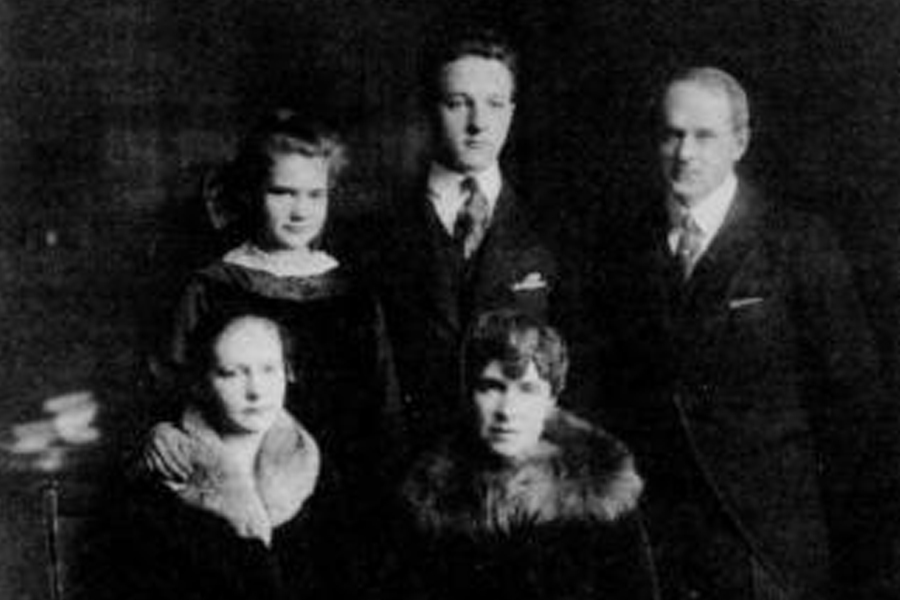
Gret married Fritz Baumann and raised five children. The household she formed echoed the one she grew up in: busy, interconnected, and steeped in ideas. Two of her sons are frequently mentioned in accounts.
- Dieter Baumann, M.D., born 1928, trained in analysis and practiced in Zurich and Milan. He lectured internationally and shared personal recollections of his grandfather Carl Jung.
- Wolf Baumann, born 1932, trained in law and contributed family reflections on Jung and the living legacy of the household.
- Other descendants include figures active in architecture and Jungian institutions. The family has remained engaged with the Jung archives and the stewardship of materials related to his work.
From Gret’s line, stewardship became practice: lectures, interviews, and institutional service kept memory and doctrine intertwined.
The Jung Family at a Glance
| Relation | Name | Life dates or notes | Role in family legacy |
|---|---|---|---|
| Father | Carl Gustav Jung | 1875 to 1961 | Founder of analytical psychology; collaborated with Gret on astrological work |
| Mother | Emma Rauschenbach Jung | 1882 to 1955 | Analyst and scholar; Rauschenbach heir; intellectual partner |
| Sister | Agathe Niehus | b. 1904 | Assisted with family publishing activities |
| Brother | Franz Jung-Merker | b. 1908 | The only son among siblings |
| Sister | Marianne Niehus | b. 1910 | Assisted with editorial and family tasks |
| Sister | Helene Hoerni | b. 1914 | Descendants involved in Jung archives |
| Spouse | Fritz Baumann | Married in the 1920s | Co-parent of five children |
| Son | Dieter Baumann, M.D. | b. 1928 | Analyst and lecturer with personal recollections of Jung |
| Son | Wolf Baumann | b. 1932 | Lawyer and family commentator |
Timeline of Key Events
| Year | Event |
|---|---|
| 1906 | Birth of Anna Margaretha Gret Jung on 8 February |
| Circa 1911 | Early fascination with astrology begins in the Jung household |
| 1920s | Marriage to Fritz Baumann; start of family life |
| 1928 | Birth of son Dieter Baumann |
| 1932 | Birth of son Wolf Baumann |
| 1930s to 1950s | Professional astrology practice; prepares charts for Jung’s patients; contributes to synchronicity studies |
| 1955 | Death of Emma Jung |
| 1961 | Death of C. G. Jung; Gret continues astrological work and family stewardship |
| 1974 to 1975 | Lectures and publishes her essay on Jung’s horoscope |
| 1995 | Gret dies at age 89 |
Work at the Intersection of Psyche and Cosmos
Gret worked where life’s rhythm and planets’ cycles intersect. Her charts prompted reflection, not judgment. Her work with archetypes, seasons, and turning points showed how outward and inner thresholds might match. The psychological perspective grounded her readings in symbol and tale rather than prediction.
In family memory she was both craftswoman and translator. She respected the mathematics but always aimed for meaning. In private notes and public talks, she depicted astrology as a symbolic language that could help dissolve stuck narratives and open new ones.
Later Reputation and Mentions
After her death, Jungian and astrological societies remember Gret through lectures, interviews, and scholarly references. Family members have given interviews and sat on boards, preserving transmission. The occasional writings and debates describe her accurate birth time handling, her involvement with Jung’s experimental initiatives, and a sardonic familial humor about astrology that conceals a serious procedure.
Her reputation is quiet yet durable. Those who work at the crossroads of astrology and psychology often discover her as a forerunner, someone who proved that rigorous analysis and symbolic sky-reading could share a desk.
FAQ
Was Gret Baumann an astrologer by profession?
Yes. She practiced astrology professionally with a distinct psychological orientation.
How did she collaborate with her father, C. G. Jung?
She calculated horoscopes for Jung’s patients and prepared charts used in his synchronicity explorations.
Did Gret publish any work?
Yes. Her best known publication is the 1975 essay Some Reflections on the Horoscope of C. G. Jung.
When was she born and when did she die?
She was born on 8 February 1906 and died in 1995 at the age of 89.
Who were her parents?
Her parents were Carl Gustav Jung and Emma Rauschenbach Jung.
Did she have children?
Yes. She and her husband Fritz Baumann had five children.
Are any descendants active in Jungian fields?
Yes. Her son Dieter Baumann became an analyst and lecturer, and other descendants have engaged with Jungian institutions.
What distinguished her approach to astrology?
She treated astrology as a symbolic and psychological language rather than a predictive or fatalistic system.
Did she play a role in Jung’s research on synchronicity?
Yes. She prepared the necessary charts that fed into Jung’s investigations of meaningful coincidence.
What was her broader family background?
Through her mother she was connected to the Rauschenbach industrial family, which supported the Jung household and projects.