Basic Information
| Item | Details |
|---|---|
| Full name | Louise Dossi Zamperini (née Dossi) |
| Birth | February 4, 1898, Pennsylvania, United States |
| Parents | Italian immigrants from the Verona region; mother’s maiden name Arduini |
| Marriage | Anthony Tony Zamperini, circa 1914 to 1915 |
| Children | Pete S. (1915), Louis Silvie Louie (1917), Sylvia Theresa (1918), Virginia Mae (1923) |
| Residences | Pennsylvania to New York state (Olean and Dunkirk), then Torrance, California by early 1920s |
| Faith | Roman Catholic |
| Occupation | Homemaker and family matriarch |
| Notability | Mother of Olympian and WWII veteran Louis Zamperini |
| Death | July 23, 1993, Los Angeles County, California, age 95 |
| Burial | Holy Cross Cemetery, Culver City, California |
Early Life and Italian Roots
Louise Dossi was born in Pennsylvania in 1898 to Italian immigrants from Verona, northern Italy. Italian at home, American in the streets and schools, her childhood was bilingual. Duty, faith, thrift, and practical kindness that holds families together were her biggest lessons from the immigrant playbook.
Her family roots are in Verona’s countryside through her mother, Arduini. Church, local food, and grueling shifts underground connected Italian families in coal country in those years. When she married, Louise brought the rhythm of a robust vernacular existence from her family’s mesh of connection and work.
Marriage, New York Beginnings, and the Journey West
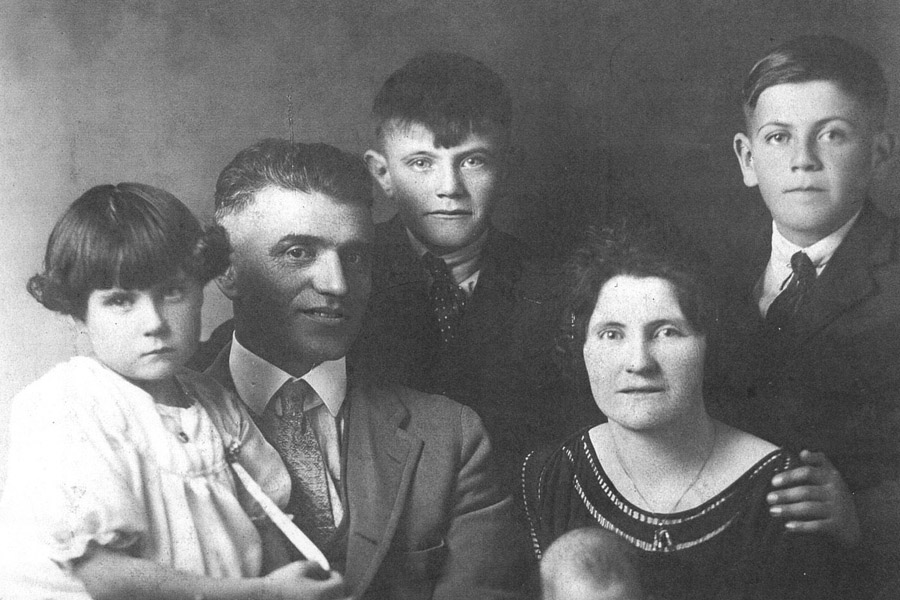
Louise married Anthony Tony Zamperini, a 1903 Atlantic crossing youth, in 1914–1915. Their marriage began in Olean and Dunkirk, New York, where Tony worked as a coal miner and eventually an electrician. Three children arrived quickly: Pete in 1915, Louis in 1917, and Sylvia in 1918.
By the early 1920s, the family moved west to Torrance, California, for better chances and a milder environment. Tony worked on railroads as an air brake mechanic. A hinge moment occurred. It replaced Rust Belt smoke with Pacific light and started Louise’s family’s growth.
Motherhood in the Great Depression
Virginia, Louise’s fourth child, was born in California in 1923, completing her family of six. Every immigrant budget struggled in the 1920s and 1930s. With wages fluctuating but prices not, frugality became the norm. Louise mastered this craft. She made family meals from groceries, did housework before dawn, and had a clean Catholic household that doubled as a resiliency school.
Pete, her oldest, excelled academically and athletically. Louis, her troublesome and quick-footed second son, became a local and national story. Sylvia and Virginia grew up in Southern California’s cultural swirl, yet the house maintained old-country rhythms. Pasta rolling, prayer, home remedies, hand-me-downs, and calm rituals helped dreams endure harsh times.
The War Years: Vigil for a Lost Son
The 1940s shattered peace. Louis, an Army Air Forces B-24 bombardier, disappeared in the Pacific following a mishap. A life insurance notice arrived. Many families closed their books. Louise didn’t. A place at the table was in her heart. Her faith, half prayer and half stubbornness, was a beacon when her son returned alive after months at sea and as a prisoner of war.
Her vigil became family legend. In a house defined by practicality, her refusal to surrender hope felt like a candle cupped against a gale. It taught her children the value of tenacity and how to make room for miracles.
Faith, Language, and Household Culture
Louise’s home was a resilient mix of Italian and American. Some sentences combined English and Italian. Grace before meals, Sunday parish life, feast days, and continuous work shaped the calendar. Pete went to USC and Louis started running on the cinder track because she stressed etiquette and knowledge. Although her name was kept private, her fingerprints were on every accomplishment that exited her door.
Family Members and Lifelines
| Name | Relation | Birth | Death | Notes |
|---|---|---|---|---|
| Anthony Tony Zamperini | Spouse | June 9, 1889 | May 5, 1975 | Verona native, immigrated 1903, electrician and railway air brake mechanic |
| Pete S. Zamperini | Son | May 24, 1915 | May 15, 2008 | USC magna cum laude 1932, WWII Navy, 30 years as high school coach |
| Louis Silvie Louie Zamperini | Son | January 26, 1917 | July 2, 2014 | 1936 Olympian, WWII bombardier and POW, later speaker and author |
| Sylvia Theresa Zamperini Flammer | Daughter | January 30, 1918 | October 28, 2008 | Married Harvey Bristow Flammer in 1939 |
| Virginia Mae Zamperini Flye | Daughter | September 19, 1923 | July 29, 2008 | Married Howard Gordon Flye in 1948, buried at Fort Logan National Cemetery |
| Cissy Cynthia Zamperini Garris | Granddaughter | 1949 | Living | Daughter of Louis and Cynthia Applewhite |
| Luke Zamperini | Grandson | 1953 | Living | Son of Louis and Cynthia Applewhite |
Family relationships were practical and strong. Pete encouraged his sibling to play sports when mischief trumped talent. Sylvia and Virginia raised families with the same values. Louis and Cynthia extended Louise’s line without diminishing its uniqueness with their grandchildren.
Timeline Highlights
| Date | Event |
|---|---|
| February 4, 1898 | Birth of Louise Dossi in Pennsylvania |
| Circa 1914 to 1915 | Marriage to Anthony Tony Zamperini |
| May 24, 1915 | Birth of first child, Pete, in Dunkirk, New York |
| January 26, 1917 | Birth of Louis in Olean, New York |
| January 30, 1918 | Birth of Sylvia in New York |
| 1919 to early 1920s | Family relocation to Torrance, California |
| September 19, 1923 | Birth of Virginia in California |
| 1930s | Family navigates the Great Depression in Torrance |
| 1943 to 1945 | War years and Louise’s vigil during Louis’s disappearance |
| May 5, 1975 | Death of husband Anthony in Los Angeles County |
| July 23, 1993 | Death of Louise at age 95, interment at Holy Cross Cemetery |
A Household that Made a Hero
Sports greatness rarely happens by chance. Louise’s Torrance kitchen taught habits as well as meals. Her harsh kindness gave her sons a safe space to test limits and correct course. Louis’s life reads like an epic, yet his mother evaluated progress in chores, schools, curfews, and miles run before supper.
Her style was not theatrical. It was incremental, like adding a stitch to a quilt each night until a blanket quietly takes shape. In this incremental world, discipline fed confidence, and confidence powered the kind of endurance that breaks tapes and survives storms.
Later Years and Quiet Longevity
Louise saw her children and grandkids grow up after outliving her husband by nearly two decades. She kept silent, followed her rituals, and believed. She lived almost a century of low-drama before her son’s fame brought her story to light. Her life spanned horses to jetliners, telegraphs to television, two world wars to the early digital age. She died in 1993.
Legacy in Public Memory
Louise never sought fame, yet her legacy lives on in her family name. Authors of her son’s life describe her as the rock mother who kept watch, set the table, and changed direction with a hard hand and sharper vision. She represents the early 20th century immigrant matriarch, a foundation on which the next generation built degrees, careers, and medals. A quiet legacy lives on in cemeteries, family photos, church records, and living rooms.
FAQ
Who was Louise Dossi Zamperini?
She was an Italian American homemaker born in 1898, best known as the mother of Olympian and WWII veteran Louis Zamperini.
When and where was she born?
She was born on February 4, 1898, in Pennsylvania.
Who was her husband?
She married Anthony Tony Zamperini, a Verona native who immigrated in 1903 and worked as an electrician and railway mechanic.
How many children did she have?
She had four children: Pete, Louis, Sylvia, and Virginia.
When did the family move to California?
They moved from New York to Torrance, California, around 1919 to the early 1920s.
What role did faith play in her life?
Catholic faith structured her household, guided traditions, and sustained her through wartime uncertainty.
How did she respond to Louis’s wartime disappearance?
She maintained a steadfast vigil and refused to accept his death as final until proven otherwise.
Did she work outside the home?
No, she remained a homemaker, managing the household and shaping her children’s education and discipline.
When did she die and where is she buried?
She died on July 23, 1993, in Los Angeles County and is buried at Holy Cross Cemetery in Culver City.
Did she have grandchildren?
Yes, through Louis and Cynthia Applewhite, she had two grandchildren, Cissy and Luke.